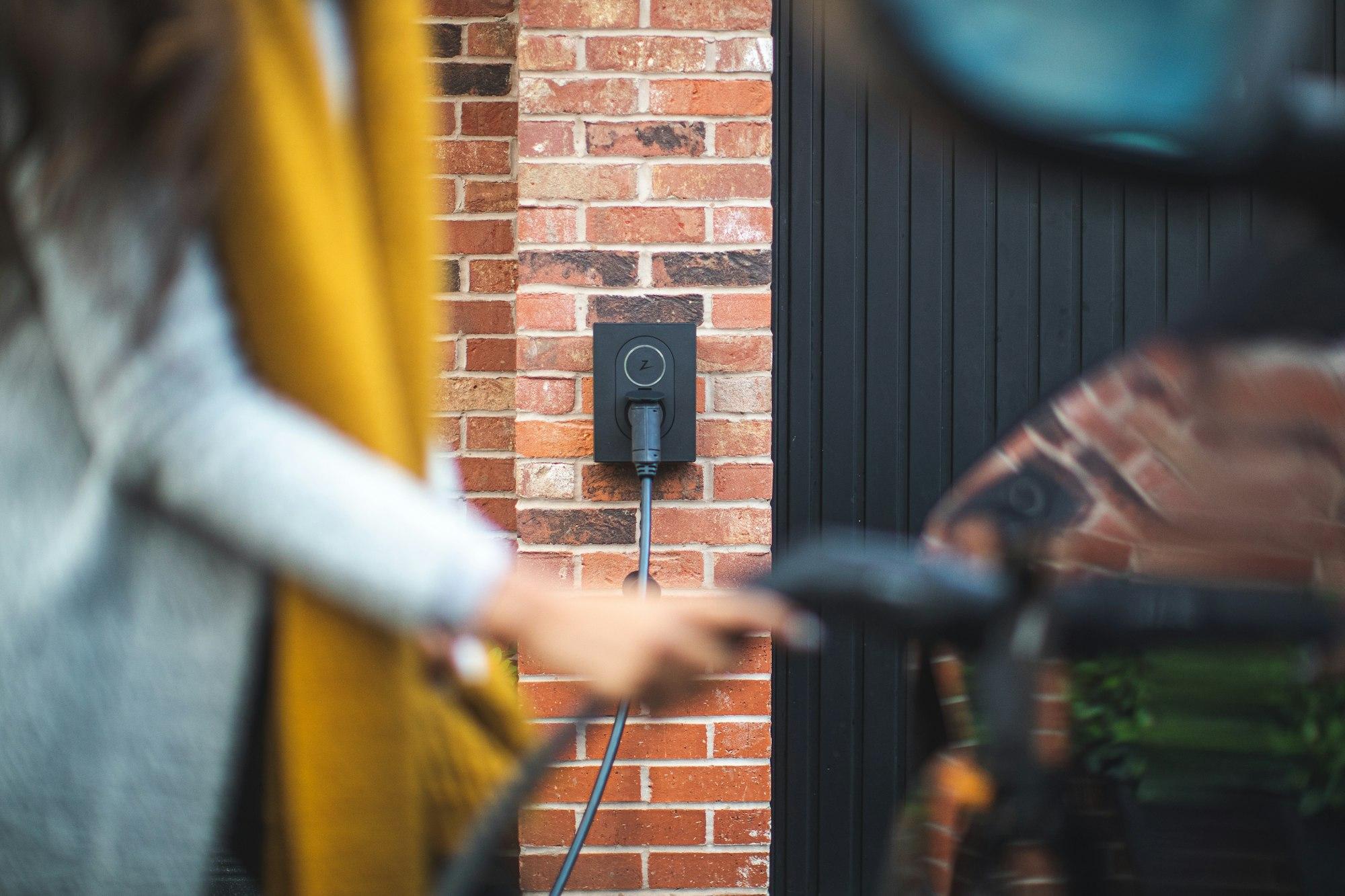
EV charger installation
Level 2 EV chargers, installed to code.
Wyatt Electric installs Level 2 home EV chargers in Harford County, Baltimore County and Baltimore City. We check that your panel can carry the load, run a dedicated 240-volt circuit, pull the permit and see it through inspection, and you get an itemized invoice for the Maryland rebate.
- ★5.0 · 12 Google reviews
- 4 Master Electricians on staff
- Licensed & insured
- Veteran owned
- 5.0 stars12 Google reviews
- Since 198640 years in business
- 4 MastersMaster Electricians
- Veteran ownedLicensed & insured
- ESGR 2010Above & Beyond Award
The short answer
What does a home EV charger install involve?
A Level 2 charger needs its own 240-volt circuit from your panel, sized to the charger. The first question is whether your panel and service have room for it. Then it's a permitted install, an inspection, and in Maryland a rebate of 50% of eligible costs, up to $700, from the Maryland Energy Administration.
- A load calculation: can your panel and service carry the charger?
- A dedicated 240-volt circuit and breaker sized to the charger
- Either a hardwired charger or a NEMA 14-50 outlet for a plug-in unit
- An electrical permit and inspection in all three jurisdictions
- An itemized invoice you can submit to the MEA rebate program
- No federal tax credit for chargers placed in service after June 30, 2026
What's included
Everything between the panel and the plug.
You bring the charger you want, or we talk through options first. We handle the electrical side end to end.
Panel and load check
We look at your service size and add up what the house already draws, so the charger doesn't push the panel past what it can safely carry.
Dedicated 240-volt circuit
A new breaker and wiring sized to the charger, run from the panel to the garage, driveway or carport by the shortest clean route.
Charger or outlet install
We mount and connect a hardwired charger, or install a NEMA 14-50 receptacle with the GFCI protection current code requires.
Permit and inspection
We file the electrical permit with your county or the city and stay with the job until it passes.
Rebate-ready paperwork
You get an itemized, paid invoice for the charger and installation to submit with your MEA rebate application after the job is done.
A plan if the panel is full
If there isn't room, we'll explain your options, from load management to a panel or service upgrade, before anyone recommends spending more.
How an EV charger install works
Four steps to charging at home.
- 1
We check the panel and the parking spot.
We look at your service, the panel's open spaces and where the car parks, then work out the circuit route.
- 2
You get a price, we pull the permit.
We explain the work, hardwired or plug-in, and the price before anything starts, then file the permit.
- 3
We run the circuit and install.
New breaker, wiring and the charger or outlet, installed to code and labeled at the panel.
- 4
Inspection, then your invoice.
Once the inspector signs off, you get the paid invoice to apply for the Maryland rebate.
Hardwired or plug-in
NEMA 14-50 outlet or hardwired charger?
Most Level 2 chargers come in a plug-in version, a hardwired version, or both. Here's how the two compare.
NEMA 14-50 outlet
- Charging power
- A 50-amp circuit, so the charger can draw up to 40 amps continuously.
- Best for
- Renters, or anyone who wants to take the charger with them or swap it later.
- Good to know
- Current code requires GFCI protection on 240-volt garage outlets. A heavy-duty receptacle matters, because the charger runs near its limit for hours.
Hardwired charger
- Charging power
- Can be set higher on a larger circuit if the charger and your panel support it.
- Best for
- Outdoor installs, faster charging, and a cleaner, permanent setup.
- Good to know
- No outlet to wear out. Moving the charger later means an electrician disconnects it.
| Setup | Charging power | Best for | Good to know |
|---|---|---|---|
| NEMA 14-50 outlet | A 50-amp circuit, so the charger can draw up to 40 amps continuously. | Renters, or anyone who wants to take the charger with them or swap it later. | Current code requires GFCI protection on 240-volt garage outlets. A heavy-duty receptacle matters, because the charger runs near its limit for hours. |
| Hardwired charger | Can be set higher on a larger circuit if the charger and your panel support it. | Outdoor installs, faster charging, and a cleaner, permanent setup. | No outlet to wear out. Moving the charger later means an electrician disconnects it. |
Either way, the charger needs a dedicated circuit. A load calculation decides how much your panel can give it.
Google reviews
What our customers say.
“They show up early and they work. They are professional, clean, and friendly. All my questions and concerns were addressed while they were on the worksite.”
“They show up on time, explain everything clearly, and do top-quality work every single time. It’s such a relief to have electricians we fully trust and we won’t use anyone else.”
“We have called Wyatt Electric twice, once in 2020 and again just recently. They fixed all of our problems and left our home clean, even after installing a ceiling fan in my daughter's bedroom.”
EV charger questions
Before you book.
How much is the Maryland EV charger rebate?
The Maryland Energy Administration's FY2027 residential rebate covers 50% of eligible costs, up to $700, for Level 2 chargers. You apply after the charger is installed and paid for. Applications close at 3:00 PM ET on May 31, 2027, or sooner if funds run out.
Is there still a federal tax credit for a home EV charger?
No. The federal Alternative Fuel Vehicle Refueling Property Credit (30C) ended for property placed in service after June 30, 2026, under Public Law 119-21.
Do I need a permit to install an EV charger?
Yes. A new 240-volt circuit for a charger needs an electrical permit in Harford County, Baltimore County and Baltimore City. We pull it and handle the inspection.
Can my panel handle an EV charger?
Often, but not always. It depends on your service size, what the house already draws, and whether the panel has open spaces. A load calculation answers it before anyone recommends an upgrade.
Should I get a plug-in or hardwired charger?
Plug-in on a NEMA 14-50 outlet is flexible and easy to replace. Hardwired can charge faster and suits outdoor installs. The table above lays out the trade-offs.
I'm building a new home. Does it need to be EV-ready?
In Maryland, new homes with their own garage, carport or driveway need at least one EV charger-installed or EV-ready parking space, for permit applications made on or after October 1, 2023 (House Bill 830, 2023). Our guide to EV-ready new homes covers it.
How do I get a price?
Book a visit online or call 410-557-8557. We check the panel and the parking spot first, then explain the work and the price before anything starts.
Where we work · EV charger installation
Three jurisdictions, one crew.
Each one has its own permit office and code edition. We work in all three and pull the permits ourselves.
- Harford CountyJarrettsville, Bel Air, Fallston, Forest Hill and the rest of the county.Electrician in Harford County
- Baltimore CountyTowson, Hunt Valley, Phoenix, Monkton, Sparks and the rest of the county.Electrician in Baltimore County
- Baltimore CityRowhomes and older houses across Baltimore City.Electrician in Baltimore City
Related services and guides
Often paired with an EV charger.
- Panel & service upgradesReplacing old or full panels and upgrading service, permitted and inspected.
- Generators & backup powerBack-up generators and transfer switches so the power stays on in an outage.
- Custom homes & new constructionCustom homes wired from rough-in through final inspection.
- Maryland EV charger rebatesThe MEA rebate: 50% of eligible costs up to $700, what counts and how to apply.
- The federal EV charger tax credit has endedWhy the 30C credit ended on June 30, 2026, and what Maryland still offers.
- EV-ready requirements for new Maryland homesWhat HB 830 requires on new homes, and how to plan the EV-ready space at rough-in.
Sources
- Maryland Energy Administration: Residential EVSE Rebate Program
- Maryland Energy Administration: FY2027 Residential EVSE Rebate Program FOA (issued 07/08/2026)
- IRS: Instructions for Form 8911, Alternative Fuel Vehicle Refueling Property Credit (30C)
- Maryland House Bill 830 (2023): Residential Construction, Electric Vehicle Charging
- Baltimore County Permits, Approvals and Inspections: electrical inspections
Book a visit
Charge at home.
We'll check the panel first.
Book online in about a minute, or call or text 410-557-8557, Monday–Friday, 7am–6pm. We confirm by text, and a licensed electrician shows up in your window.
Burning smell, sparking or no power? Don't book online. Call now: 410-557-8557