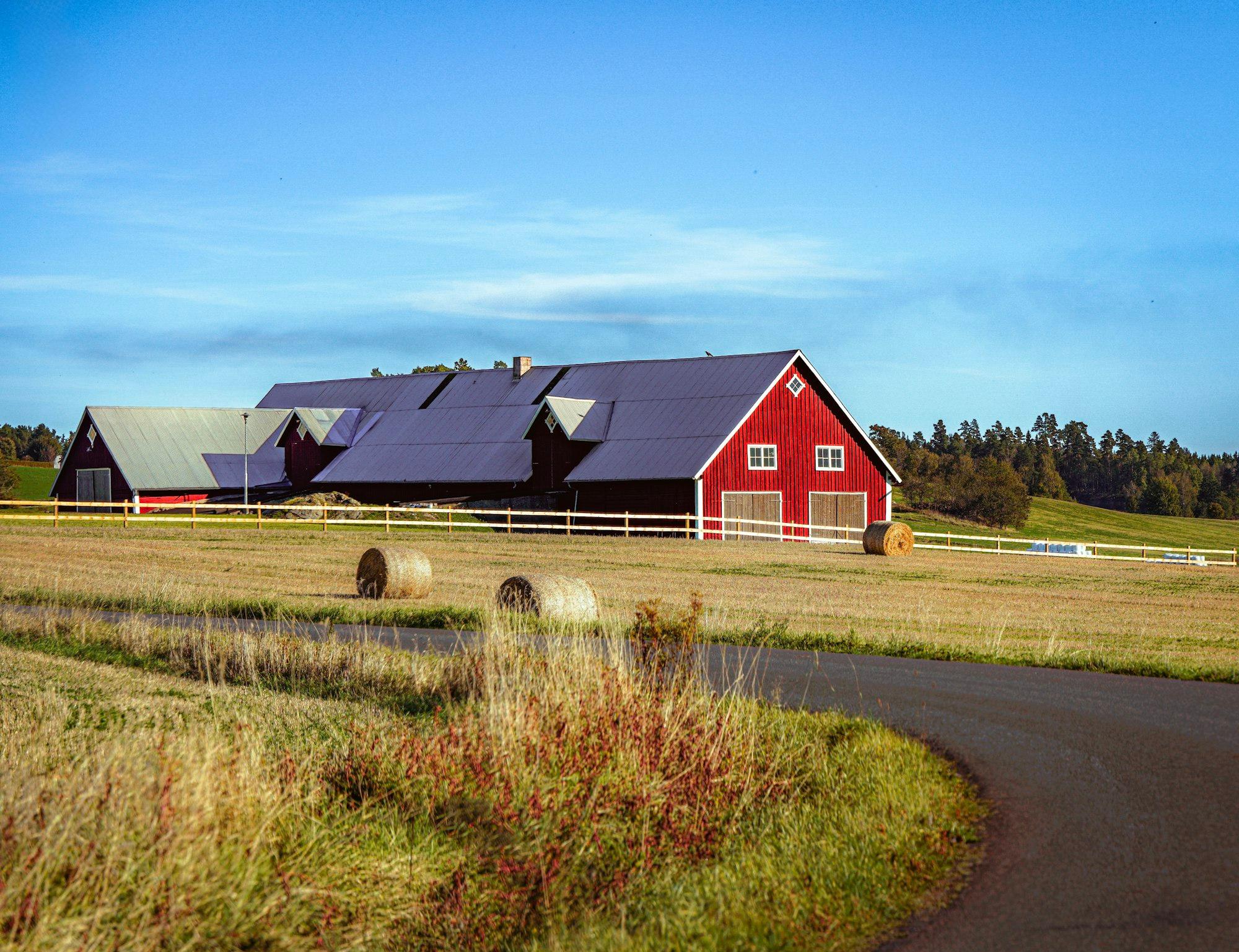
Farm & agricultural buildings
Electricians for barns and farm buildings.
Wyatt Electric is based in Jarrettsville, and agricultural building electrical work has been one of our services for years. We bring power, lighting and outlets to barns, pole buildings, run-in sheds and workshops across rural Harford County and northern Baltimore County, wired for dust, moisture and livestock.
- ★5.0 · 12 Google reviews
- 4 Master Electricians on staff
- Licensed & insured
- Veteran owned
- 5.0 stars12 Google reviews
- Since 198640 years in business
- 4 MastersMaster Electricians
- Veteran ownedLicensed & insured
- ESGR 2010Above & Beyond Award
The short answer
How do you get electricity to a barn?
Usually with an underground feeder from the house panel, or a separate service from the utility, to a subpanel in the barn. The barn then needs its own grounding and wiring suited to dust, moisture and animals. The right choice depends on distance, load and what the building is for.
- Underground feeders from the house to a barn or outbuilding
- Subpanels with their own grounding electrode at the building
- Lighting for stalls, aisles, lofts and work areas
- Weather-resistant outlets with GFCI protection
- Circuits for water heaters, tank heaters, fans and well pumps
- Security and dusk-to-dawn lighting across the yard
How a barn job runs
Walk it, plan it, power it.
- 1
We walk the property.
We look at the building, the distance from the house or meter, and what you'll run: lights, outlets, heaters, fans, pumps or a shop.
- 2
We plan the feed.
We work out whether a feeder from your house panel will carry the load or a separate service makes more sense, and give you the price before work starts.
- 3
Permit, trench and wiring.
We pull the permit, run the feeder, set the subpanel and grounding, and wire the building with materials made for farm conditions.
- 4
Inspection and walkthrough.
We handle the inspection, label the panel and show you where everything is shut off.
Why barns are different
Dust, damp and livestock.
The National Electrical Code has a whole article, Article 547, for agricultural buildings where dust, moisture or corrosive conditions are part of daily life. Here's what that changes compared with wiring a house.
Dust and chaff
- The risk
- Hay, bedding and feed dust settle on fixtures and in boxes, where it can catch heat.
- How we wire for it
- Dust-tight boxes and fixtures, and wiring methods the code allows for these buildings.
Moisture and washdown
- The risk
- Water, condensation and hoses reach places a house never gets wet.
- How we wire for it
- Weather-resistant devices, gasketed covers and GFCI protection.
Corrosion
- The risk
- Ammonia from animal waste corrodes metal boxes, fittings and connections.
- How we wire for it
- Nonmetallic or corrosion-resistant boxes, fittings and wiring.
Livestock
- The risk
- Animals are far more sensitive than people to small stray voltages.
- How we wire for it
- Equipotential planes and bonding where livestock stand, as Article 547 requires.
Separate building
- The risk
- A detached building needs its own disconnect and grounding.
- How we wire for it
- A subpanel with a disconnect and grounding electrode at the barn, per NEC Article 225 and Section 250.32.
| Condition | The risk | How we wire for it |
|---|---|---|
| Dust and chaff | Hay, bedding and feed dust settle on fixtures and in boxes, where it can catch heat. | Dust-tight boxes and fixtures, and wiring methods the code allows for these buildings. |
| Moisture and washdown | Water, condensation and hoses reach places a house never gets wet. | Weather-resistant devices, gasketed covers and GFCI protection. |
| Corrosion | Ammonia from animal waste corrodes metal boxes, fittings and connections. | Nonmetallic or corrosion-resistant boxes, fittings and wiring. |
| Livestock | Animals are far more sensitive than people to small stray voltages. | Equipotential planes and bonding where livestock stand, as Article 547 requires. |
| Separate building | A detached building needs its own disconnect and grounding. | A subpanel with a disconnect and grounding electrode at the barn, per NEC Article 225 and Section 250.32. |
Sources are listed at the bottom of this page.
Google reviews
What our customers say.
“They show up early and they work. They are professional, clean, and friendly. All my questions and concerns were addressed while they were on the worksite.”
“They show up on time, explain everything clearly, and do top-quality work every single time. It’s such a relief to have electricians we fully trust and we won’t use anyone else.”
“We have called Wyatt Electric twice, once in 2020 and again just recently. They fixed all of our problems and left our home clean, even after installing a ceiling fan in my daughter's bedroom.”
Barn and farm questions
Before you book.
Can I run an extension cord or a buried cable to the barn myself?
We don't recommend it. Cords aren't made for permanent use, and a buried feeder has to be the right cable type, buried at the right depth and protected where it comes out of the ground. It also needs an electrical permit.
Do I need a permit to wire a barn?
Yes. New feeders, subpanels and circuits in an outbuilding need an electrical permit in Harford County and Baltimore County, and we handle the inspection. Talk to the county about any separate building or zoning permits for the structure itself.
Should the barn have its own electric service?
Sometimes. A small barn with lights and a few outlets usually runs fine off a feeder from the house. A big shop, or a building far from the house, can be better on its own meter. We'll compare both with you.
Can you wire a new pole building?
Yes. The best time to bring us in is before the walls are sheathed or the interior is finished, so we can plan fixture locations and run the wiring cleanly.
Which areas do you cover for farm work?
We're based in Jarrettsville and work across Harford County, Baltimore County and Baltimore City. Barns and outbuildings are most common in rural Harford County and northern Baltimore County, close to home for us.
How do I get a price?
Book a visit online or call 410-557-8557. We walk the building and the route from your power source, then explain the work and the price before anything starts.
Where we work · Farm & agricultural buildings
Three jurisdictions, one crew.
Each one has its own permit office and code edition. We work in all three and pull the permits ourselves.
- Harford CountyJarrettsville, Bel Air, Fallston, Forest Hill and the rest of the county.Electrician in Harford County
- Baltimore CountyTowson, Hunt Valley, Phoenix, Monkton, Sparks and the rest of the county.Electrician in Baltimore County
- Baltimore CityRowhomes and older houses across Baltimore City.Electrician in Baltimore City
Related services
Also useful on a farm.
Book a visit
Tell us what's going on.
We'll take it from there.
Book online in about a minute, or call or text 410-557-8557, Monday–Friday, 7am–6pm. We confirm by text, and a licensed electrician shows up in your window.
Burning smell, sparking or no power? Don't book online. Call now: 410-557-8557